
Introduction
Our eyes help us experience the beauty of the world around us — from seeing the faces of our loved ones to enjoying the colours, details, and moments of everyday life. However, when vision gradually becomes blurry or changes without a clear reason, it may indicate an underlying eye condition. Glaucoma is one such condition, often called the “silent thief of vision” because it can slowly damage the optic nerve without causing noticeable symptoms in the early stages.
In India, glaucoma is a growing eye health concern. It is estimated that around 12 million people in India are living with glaucoma, and approximately 1.5 million people have glaucoma-related blindness. It is also recognised as one of the leading causes of irreversible blindness in the country.
In this blog, we will explain how glaucoma affects the eyes, the different types and risk factors, how it is diagnosed, and the treatment options available to help protect vision.
What Is Glaucoma?
Glaucoma is an eye condition that causes damage to the optic nerve, which carries visual information from the eye to the brain.
In many cases, glaucoma is associated with increased pressure inside the eye, known as intraocular pressure (IOP). However, glaucoma can also occur even when eye pressure is within the normal range.
Since optic nerve damage caused by glaucoma is usually irreversible, early detection and regular eye examinations are important to protect vision.
Types of Glaucoma
Glaucoma can occur in different forms. Identifying the type helps the ophthalmologist decide the most appropriate treatment approach.
Open-Angle Glaucoma
Open-angle glaucoma is the most common type of glaucoma. It develops gradually when the drainage system of the eye becomes less effective, causing slow damage to the optic nerve.
Common features include:
- Slow progression over time
- Gradual loss of peripheral vision
- Often detected during routine eye examinations
Angle-Closure Glaucoma
Angle-closure glaucoma occurs when the drainage area of the eye becomes blocked, leading to a sudden increase in eye pressure.
Symptoms may include:
- Sudden eye pain
- Redness of the eye
- Blurred vision
- Headache
- Nausea or vomiting
This condition requires immediate medical attention.
Other Types of Glaucoma
Other forms include normal-tension glaucoma and secondary glaucoma, which may occur due to factors such as eye injuries, inflammation, certain medications, or other eye conditions.
Who Is at Higher Risk of Developing Glaucoma?
Glaucoma can affect anyone, but certain factors may increase the risk.
People at higher risk include:
- Individuals above 40 years of age
- People with a family history of glaucoma
- Individuals with diabetes
- People with increased eye pressure
- Those with previous eye injuries
- Individuals with certain eye conditions
Regular eye examinations are especially important for people with these risk factors.
Symptoms of Glaucoma
Glaucoma may not show noticeable symptoms in the early stages. As the condition progresses, symptoms may include:
- Difficulty seeing objects from the side
- Gradual narrowing of vision
- Blurred or hazy vision
- Difficulty adjusting to changes in lighting
- Eye pain or redness in certain types of glaucoma
- Sudden severe eye pain, blurred vision, headache, nausea, or vomiting in angle-closure glaucoma
Sudden changes in vision require urgent medical evaluation.
How Is Glaucoma Diagnosed?
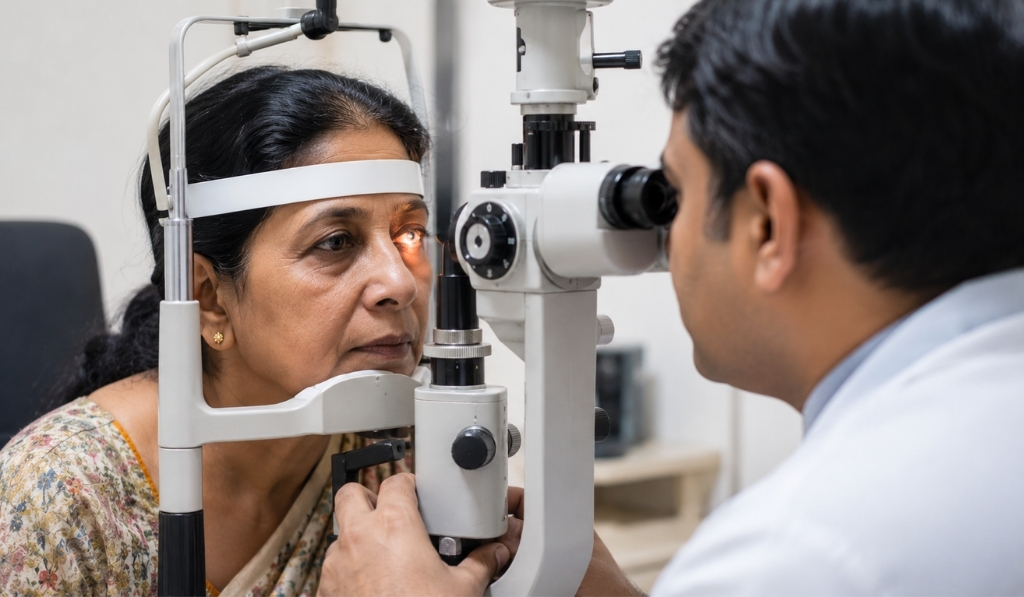
Glaucoma cannot be diagnosed through a simple vision check alone. A detailed eye examination helps assess eye pressure, optic nerve health, and vision changes.
Diagnostic tests may include:
- Tonometry – Measures pressure inside the eye
- Optic nerve examination – Checks for signs of optic nerve damage
- Visual field test – Evaluates peripheral vision
- Optical Coherence Tomography (OCT) – Provides detailed images of eye structures
- Gonioscopy – Helps identify the type of glaucoma
Early diagnosis allows timely management and helps protect remaining vision.
Treatment Options for Glaucoma
The treatment approach depends on the type of glaucoma, eye pressure, optic nerve damage, and overall eye health.
Treatment options may include:
Eye Drops
Prescription eye drops are commonly used to reduce eye pressure and prevent further damage.
Laser Treatment
Laser procedures may help improve fluid drainage and reduce eye pressure in selected cases.
Glaucoma Surgery
Surgery may be recommended when eye pressure cannot be controlled with medicines or laser treatment.
Regular follow-up with an ophthalmologist is important to monitor the condition.
Can Glaucoma Be Prevented?
Not every case of glaucoma can be prevented, especially when factors such as age and family history are involved.
However, regular eye examinations can help detect glaucoma early.
You can support your eye health by:
- Attending regular comprehensive eye examinations
- Following prescribed glaucoma treatment
- Keeping other health conditions under control
- Informing your ophthalmologist about family history
- Protecting your eyes from injuries
- Attending scheduled follow-up appointments
Frequently Asked Questions (FAQs)
Q1. Can glaucoma be cured?
Glaucoma-related optic nerve damage cannot usually be reversed. However, treatment can help control the condition and reduce the risk of further vision loss.
Q2. Is glaucoma painful?
Some types of glaucoma may cause pain, while others may develop without noticeable discomfort. Sudden severe eye pain requires urgent medical evaluation.
Q3. Can glaucoma affect both eyes?
Yes. Glaucoma can affect both eyes, although the severity and progression may vary.
Q4. Does diabetes increase the risk of glaucoma?
Diabetes may increase the risk of certain eye conditions, including glaucoma. Regular eye examinations are important for people with diabetes.
Q5. Can glaucoma-related vision loss be restored?
Vision lost due to optic nerve damage generally cannot be restored. Treatment focuses on protecting remaining vision.
Q6. Do all glaucoma patients need surgery?
No. Many patients manage glaucoma with prescribed medicines, while others may require laser treatment or surgery depending on their condition.
Why Choose P.D. Hinduja Sindhi Hospital for Glaucoma Care?
At P.D. Hinduja Sindhi Hospital, patients can receive comprehensive ophthalmic evaluation for glaucoma and other eye conditions. Our ophthalmologists assess each patient’s eye health, risk factors, and test results before recommending an appropriate management plan.
The approach to glaucoma care focuses on early identification, regular monitoring, and treatment based on the individual’s condition. Patients are guided through their diagnosis and follow-up requirements to better understand their eye health and treatment.
Conclusion
Glaucoma is a progressive eye condition that requires regular monitoring and long-term management. Since optic nerve damage cannot usually be reversed, early detection and timely treatment play an important role in protecting remaining vision. Regular monitoring helps your ophthalmologist understand how the condition is changing and whether the current treatment remains effective. For comprehensive glaucoma evaluation and personalised eye care, consult the ophthalmologists at P.D. Hinduja Sindhi Hospital.