
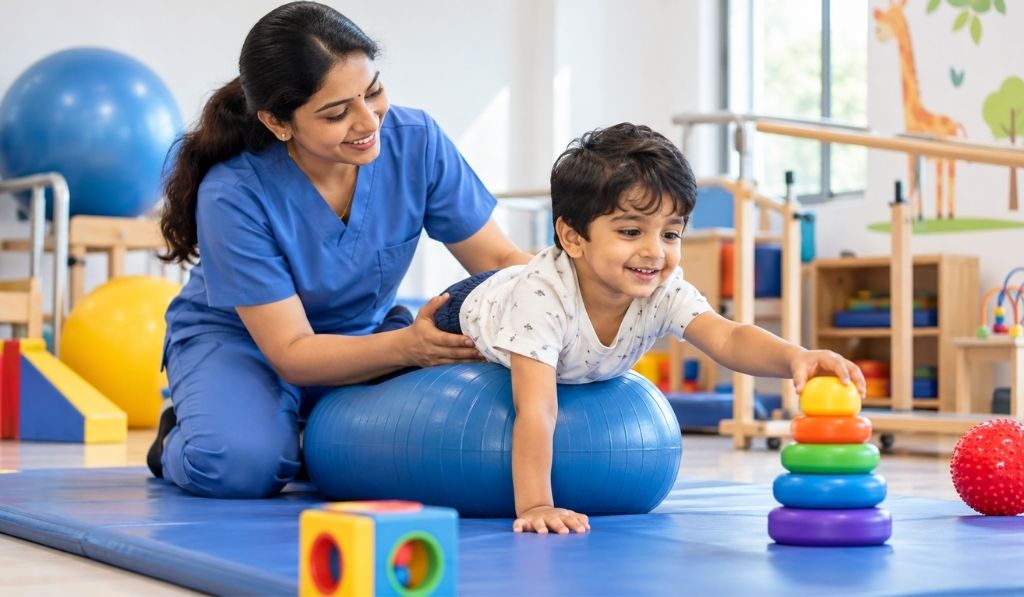
When children face challenges with movement, coordination, balance, or developmental skills due to neurological conditions, timely rehabilitation support can make an important difference. Neuro-Paediatric rehabilitation focuses on helping children improve functional abilities, participate in daily activities, and develop essential skills through personalised therapy.
At P. D. Hinduja Sindhi Hospital, children receive specialised rehabilitation support based on their individual conditions, developmental needs, and therapy goals.
In this blog, we will understand what neuropaediatric rehabilitation is, the conditions that may require it, how the rehabilitation process works, the therapies involved, and how early support can help children progress.
Synopsis
- What Is Neuro Paediatric Rehabilitation?
- Conditions That May Require Neuro-Paediatric Rehabilitation
- How the Rehabilitation Process Works
- Therapies Involved in Neuro-Paediatric Rehabilitation
- Benefits of Early Neuro-Paediatric Rehabilitation
- Why Choose P. D. Hinduja Sindhi Hospital, Bangalore
- Frequently Asked Questions
What Is Neuro-Paediatric Rehabilitation?
Neuropaediatric rehabilitation is a specialised approach that supports children with conditions affecting the brain, spinal cord, nerves, and muscles.
It focuses on supporting:
- Movement and posture
- Muscle control
- Balance and coordination
- Developmental skills
- Everyday functional activities
A rehabilitation programme is created after understanding the child’s condition, abilities, and specific needs.
Conditions That May Require Neuro-Paediatric Rehabilitation
Children with neurological or developmental conditions may benefit from rehabilitation support, including:
- Cerebral palsy
- Developmental delays
- Brain injuries
- Neuromuscular disorders
- Spinal cord-related conditions
- Genetic conditions affecting movement
- Other neurological conditions impacting daily activities
The type of rehabilitation depends on the child’s age, diagnosis, abilities, and individual needs.
How the Rehabilitation Process Works
Assessment and Evaluation
The process begins with a detailed assessment to understand the child’s current abilities and challenges.
Specialists may evaluate:
- Muscle tone and strength
- Posture and balance
- Movement patterns
- Walking ability
- Motor skills
- Functional activities
This assessment helps identify areas that require support and guides further therapy planning.
Goal Setting
After evaluation, therapy goals are created based on the child’s abilities and requirements.
Goals may focus on:
- Improving mobility
- Supporting daily activities
- Enhancing coordination
- Developing functional skills
Progress is reviewed regularly, and therapy plans are adjusted when needed.
Therapies Involved in Neuro-Paediatric Rehabilitation
Neuropaediatric Physiotherapy
Neuro-paediatric physiotherapy in Bangalore focuses on supporting children with neurological conditions through structured exercises and movement-based therapy.
It may include:
- Strength and flexibility exercises
- Balance activities
- Posture training
- Mobility practice
- Walking support
Occupational Therapy
Occupational therapy helps children develop skills needed for everyday tasks.
It may support:
- Fine motor skills
- Hand coordination
- Self-care activities
- Sensory processing abilities
Speech and Communication Therapy
Some neurological conditions may affect communication or swallowing.
Speech therapy may focus on:
- Communication development
- Speech skills
- Language support
- Feeding and swallowing assistance when required
Gait and Mobility Training
Children who experience difficulty with walking may receive mobility training to support safer movement patterns and participation in daily activities.
Parent and Carer Guidance
We provide guidance on supportive activities, positioning techniques, and routines that parents can continue at home.
Benefits of Early Neuro-Paediatric Rehabilitation
Early rehabilitation can help identify challenges at the right time and provide appropriate support during important stages of a child’s development.
It may help children:
- Improve functional abilities
- Develop better movement patterns
- Participate more actively in daily activities
- Build confidence in performing everyday tasks
- Receive continuous support according to their changing needs
Every child’s progress is different and depends on their condition, abilities, and response to therapy.
Why Choose P. D. Hinduja Sindhi Hospital for Neuro-Paediatric Rehabilitation?
The hospital provides child-focused rehabilitation with personalised therapy plans based on each child’s condition and needs. It is a trusted neuro-paediatric physiotherapy centre in Bangalore, offering structured therapy support with expert guidance.
- Personalised rehabilitation programmes
- Experienced rehabilitation professionals
- Affordable treatment options
- Home-based therapy services available when required
- Family guidance and coordinated care
Conclusion
Neuropaediatric rehabilitation provides structured support for children facing challenges related to neurological conditions. Early evaluation, personalised therapy, and continuous guidance can help children improve their functional abilities and participate more confidently in daily activities.
If your child needs support for movement, coordination, balance, or developmental concerns, consult the specialists at P. D. Hinduja Sindhi Hospital for appropriate evaluation and rehabilitation guidance.
FAQs
What is neuropaediatric rehabilitation?
Neuropaediatric rehabilitation is a specialised rehabilitation approach that supports children with neurological conditions affecting movement, development, and daily functioning.
Which children may benefit from paediatric neurorehabilitation?
Children with conditions such as cerebral palsy, developmental delays, brain injuries, neuromuscular disorders, or other neurological challenges may benefit from rehabilitation support.
What is included in paediatric neurophysiotherapy?
Neuro-paediatric physiotherapy may include exercises and activities focused on posture, strength, balance, mobility, and functional movement based on the child’s needs.
Why is early rehabilitation important for children?
Early rehabilitation allows timely support during key developmental stages and helps create appropriate therapy goals based on the child’s abilities.