
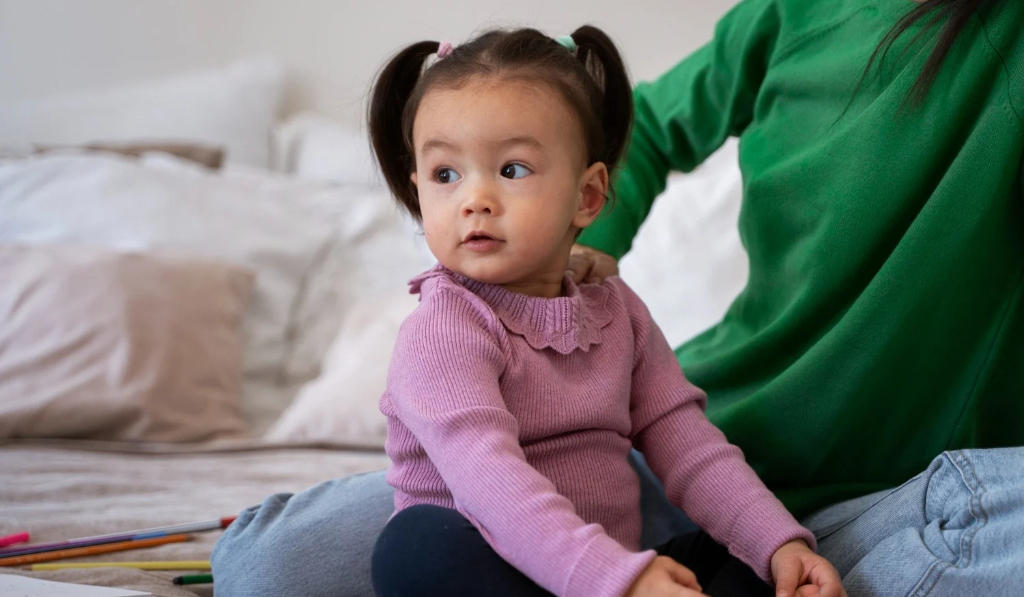
Every child begins speaking at their own pace. Some toddlers start using words early, while others take longer to express themselves. However, when a child struggles to communicate or does not reach expected speech milestones, it may indicate a developmental concern. Understanding delayed speech in toddlers can help parents recognise when their child needs additional support.
Synopsis
- What Is Delayed Speech in Toddlers?
- Normal Speech Milestones by Age
- Early Signs of Speech Delay
- Common Causes of Delayed Speech
- When Should Parents Consult a Doctor?
- Diagnosis and Treatment
- How Parents Can Encourage Speech Development
What Is Delayed Speech in Toddlers?
Speech delay occurs when a child develops speaking skills more slowly than expected for their age. Some toddlers may understand what others say but struggle to express themselves, while others may have difficulty understanding and using language.
Normal Speech Milestones by Age
Speech and language skills develop gradually. Although every child progresses differently, certain milestones can help parents monitor development.
| Age | Expected Speech and Language Milestones |
| 12 months | Uses gestures, understands familiar words and may say simple words such as “mama” or “dada”. |
| 18 months | Tries to say at least three words other than “mama” or “dada” and follows simple instructions. |
| 2 years | Combines two or more words to express needs, such as “more milk”. |
| 3 years | Speaks in short sentences, asks simple questions and participates in basic conversations. |
These are general developmental milestones, not strict deadlines.
Early Signs of Speech Delay
Parents should pay attention to the following signs:
- Limited use of meaningful words for their age.
- Difficulty combining two words by the age of two.
- Trouble understanding simple instructions.
- Limited pointing, waving or other communication gestures.
- Difficulty expressing basic needs.
- Loss of previously developed speech or language skills.
Common Causes of Delayed Speech
Several factors can affect a toddler’s speech development, including:
- Hearing difficulties: Reduced hearing can interfere with learning sounds and words.
- Developmental language disorders: Some children struggle to understand or use language.
- Neurodevelopmental conditions: Autism spectrum disorder and other developmental conditions may affect communication.
- Oral-motor difficulties: Problems coordinating the muscles involved in speech can affect sound production.
Sometimes, a child may develop speech more slowly without an identifiable medical condition.
Screen Time Recommendations by Age
Early screen exposure, particularly before age two, may affect language development when it replaces conversations and interactive play.
The Indian Academy of Pediatrics (IAP) recommends avoiding screen exposure below two years, except occasional video calls with familiar family members.
| Age | Screen Time Recommendations |
| Below 1 year | No screen time, except occasional family video calls. |
| 1–2 years | No screen time, except occasional family video calls. |
| 2–3 years | Preferably within 30 minutes daily; IAP maximum is 1 hour. |
| 3–4 years | Preferably within 30 minutes daily; IAP maximum is 1 hour. |
| 4–5 years | Preferably within 30 minutes daily; IAP maximum is 1 hour. |
When Should Parents Consult a Doctor?
Consult a paediatrician if your child is not attempting meaningful words by 18 months, cannot combine two words by age two or has difficulty responding to familiar sounds and instructions.
Seek prompt medical assessment if your child loses previously acquired communication skills. Early evaluation can help identify concerns and determine appropriate support.
How Is Speech Delay Diagnosed and Treated?
A paediatrician reviews the child’s developmental history, communication abilities and overall health. A hearing assessment and evaluation by a speech and language therapist may also be recommended.
Treatment depends on the underlying cause and may involve speech and language therapy, parent-guided communication activities or treatment for associated hearing difficulties.
At PD Hinduja Sindhi Hospital, our experienced speech therapist provides personalised guidance to help children with delayed speech develop their communication skills.
How Parents Can Encourage Speech Development
Simple everyday activities can support your toddler’s communication skills:
- Talk to your child during meals, playtime and daily routines.
- Read picture books and name familiar objects.
- Sing nursery rhymes and encourage imitation.
- Allow your child time to respond during conversations.
- Encourage interactive play and limit passive screen viewing.
These activities support language development but do not replace professional assessment when a delay is suspected.
Conclusion
Speech development varies among toddlers, but persistent difficulties should not be overlooked. Recognising missed milestones and seeking early advice can help children receive the support they need.
At PD Hinduja Sindhi Hospital, we provide paediatric care in Bangalore, helping parents understand developmental concerns and make informed decisions about their children’s health.
Frequently Asked Questions
1. Is it normal for a two-year-old not to talk?
Most two-year-olds can combine at least two words. If your child is not doing so, a developmental assessment is recommended.
2. Can delayed speech improve without treatment?
Some children catch up naturally, but others need professional support. An assessment can help determine the appropriate approach.
3. Does screen time cause speech delay?
Excessive passive screen use may reduce opportunities for interaction, but speech delay can have several causes.
4. Can bilingualism cause delayed speech?
No. Learning two languages does not cause speech delay, although children may distribute their vocabulary across both languages.