
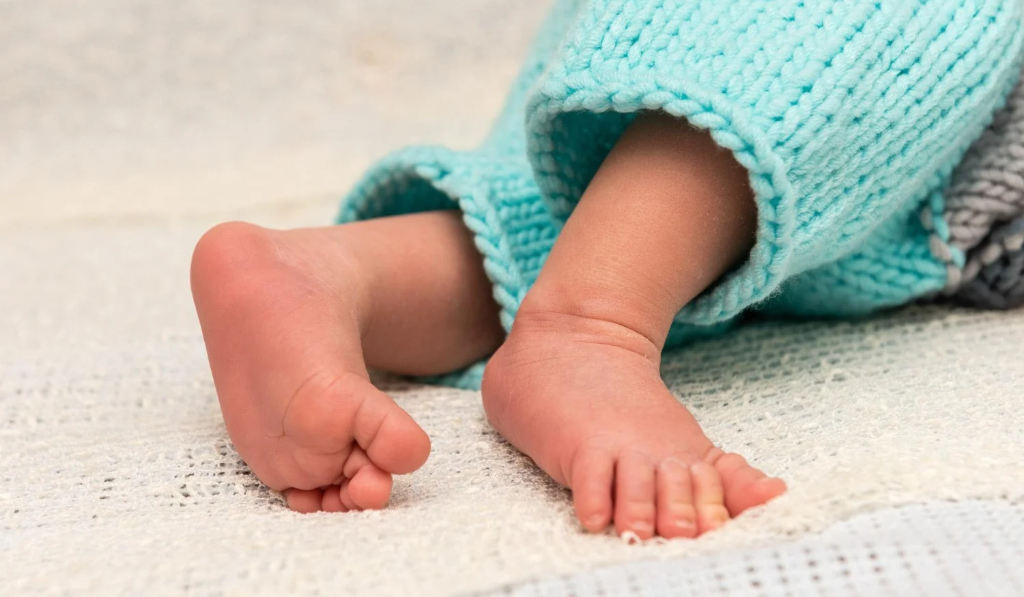
Noticing that a newborn’s foot turns inward or points downward can be worrying for parents, especially when the foot does not straighten naturally. Although it may appear unusual, this condition is recognised at birth and can often be treated successfully when appropriate care begins early.
Clubfoot in newborns is a congenital condition affecting the position and movement of one or both feet. Advances in paediatric orthopaedic care have made it possible to correct most cases without extensive surgery, helping children develop healthy walking abilities.
Understanding its causes, treatment options, and recovery process can help parents make informed decisions about their baby’s care.
Synopsis
- What Is Clubfoot in Newborns?
- What Causes Clubfoot in Babies?
- Can Clubfoot Be Corrected Without Surgery?
- How Does the Ponseti Method Work?
- When Is Surgery Required for Clubfoot?
- What Can Parents Expect After Treatment?
- Conclusion
What Is Clubfoot in Newborns?
Clubfoot, medically known as congenital talipes equinovarus (CTEV), is a birth condition in which a baby’s foot turns inward and downward. It occurs when the muscles, tendons, and other tissues around the foot and ankle develop in a way that restricts normal positioning.
The condition may affect one or both feet. Although clubfoot is generally not painful in newborns, untreated cases can lead to difficulty walking and long-term foot problems.
What Causes Clubfoot in Babies?
The exact cause of clubfoot is not always known. However, several factors may contribute to its development:
- Genetic factors: Babies with a family history of clubfoot have a higher likelihood of developing the condition.
- Developmental factors: Differences in how the muscles, tendons, and bones form before birth may influence foot positioning.
- Associated medical conditions: In some cases, clubfoot occurs alongside neurological or musculoskeletal disorders.
Clubfoot may be identified during a prenatal ultrasound or through a physical examination after birth.
Can Clubfoot Be Corrected Without Surgery?
Yes. Most newborns with clubfoot can be treated without major reconstructive surgery. The Ponseti method is widely recognised as the preferred initial treatment because it gradually corrects foot positioning through gentle manipulation and casting.
Treatment is ideally started during the first few weeks after birth, when the baby’s tissues are more flexible. Early intervention can improve foot alignment and support normal movement as the child grows.
However, many babies still require a minor procedure to release a tight Achilles tendon as part of treatment.
How Does the Ponseti Method Work?
The Ponseti method is a structured treatment approach involving three main stages.
1. Gentle Stretching and Casting
A trained specialist carefully positions the baby’s foot and applies a cast extending above the knee. The cast is usually changed every week to gradually improve alignment.
Most babies require approximately five to eight casts, depending on the severity of the condition.
2. Achilles Tendon Release
Many babies need a minor procedure called an Achilles tenotomy to release tightness in the tendon at the back of the heel.
A final cast is generally worn for about three weeks while the tendon heals.
3. Bracing
After casting, babies wear special shoes connected by a bar to maintain the corrected foot position.
Bracing is usually required for most of the day initially, followed by wearing the brace during sleep for several years, as advised by the specialist.
Following the prescribed bracing schedule is essential because clubfoot can return even after successful initial correction.
When Is Surgery Required for Clubfoot?
Extensive surgery is usually unnecessary when the Ponseti method is applied correctly. However, further surgical treatment may be considered if:
- The foot does not respond adequately to casting.
- The deformity is particularly severe or rigid.
- Clubfoot returns despite treatment and requires additional correction.
- The condition is associated with other complex medical disorders.
The treatment decision depends on the baby’s individual condition and assessment by a paediatric orthopaedic specialist.
What Can Parents Expect After Treatment?
Most children treated successfully for clubfoot can learn to walk, run, and participate in physical activities.
Parents can support recovery by:
- Attending scheduled follow-up appointments.
- Following casting and bracing instructions carefully.
- Checking for skin irritation or discomfort caused by casts or braces.
- Reporting any changes in foot positioning to the treating specialist.
- Continuing recommended care even after the foot appears corrected.
Long-term follow-up helps identify recurrence early and maintain the benefits of treatment.
Conclusion
A foot that appears turned at birth does not necessarily mean a child will face lifelong mobility difficulties. With timely treatment, clubfoot in newborns can often be corrected without extensive surgery, allowing children to develop functional movement. At PD Hinduja Sindhi Hospital in Bangalore, parents can seek medical guidance to understand their baby’s condition and the appropriate steps toward treatment and healthy development.