
Introduction
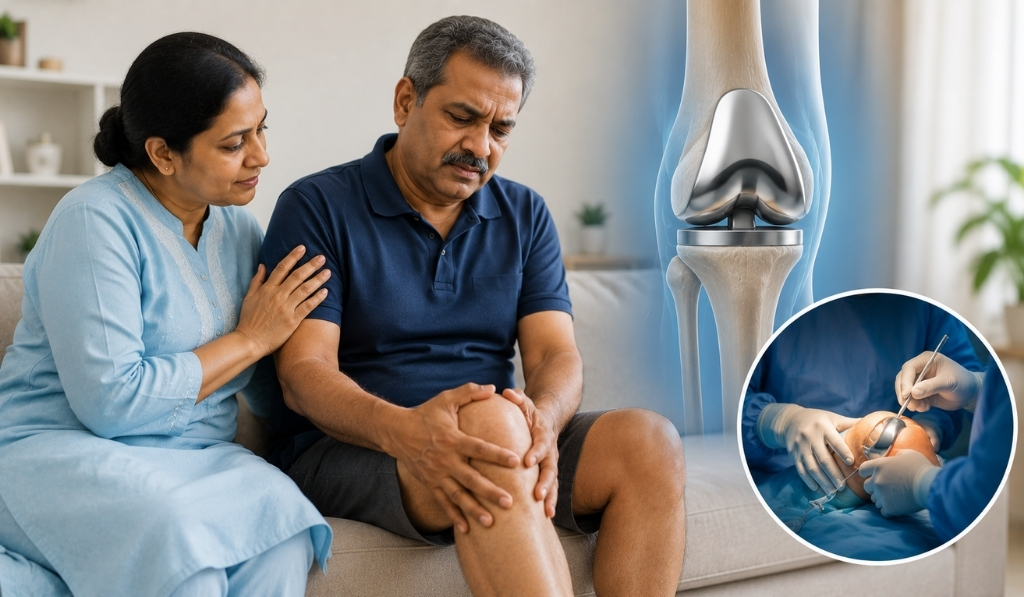
Knee pain can gradually make simple activities more difficult. Walking, climbing stairs, standing for long periods or getting up from a chair may become uncomfortable.
Knee arthritis is a common cause of persistent knee pain and difficulty with movement in India. According to a 2025 analysis of population-based studies, about 20.24% of Indians are affected, and the burden becomes much greater with age, rising to nearly 47% among people aged 60 years and older.
When the knee joint suffers severe damage, medicines, physiotherapy, and other non-surgical treatments may fail to provide sufficient relief. In such situations, knee replacement surgery may be considered.
Knee replacement is a well-established procedure that replaces damaged joint surfaces with artificial components. The aim is to reduce pain, improve knee function and help patients return to everyday activities.
This guide explains what knee replacement surgery is, when it may be recommended, how it is performed, what recovery involves and what patients can expect after surgery.
Synopsis
- Introduction
- What Is Knee Replacement Surgery?
- Why Is Knee Replacement Surgery Needed?
- What Causes the Need for Knee Replacement?
- Which Conditions May Lead to Knee Replacement?
- When Is Non-Surgical Treatment No Longer Enough?
- What Are the Different Types of Knee Replacement?
- How Is Knee Replacement Surgery Performed?
- What Tests Are Done Before Knee Replacement?
- How Should You Prepare for Knee Replacement Surgery?
- What Happens During Recovery After Knee Replacement?
- Is Physiotherapy Important After Knee Replacement?
- What Are the Benefits of Knee Replacement Surgery?
- What Are the Risks of Knee Replacement Surgery?
- How Long Does a Knee Replacement Last?
- What Activities Can You Do After Knee Replacement?
- What Should You Expect After Knee Replacement?
- When Should You Contact Your Doctor After Surgery?
- Knee Replacement Care at P.D. Hinduja Sindhi Hospital
- Conclusion
- Frequently Asked Questions
What Is Knee Replacement Surgery?
Knee replacement surgery, also known as knee arthroplasty, is a procedure used to replace damaged surfaces of the knee joint with artificial components. The aim is to reduce pain and improve the function of the knee.
The procedure does not simply replace the entire knee. The surgeon removes the damaged joint surfaces and places specially designed implants that allow the knee to move more smoothly.
Knee replacement may help with:
- Persistent pain caused by advanced knee arthritis
- Difficulty with everyday movement
- Reduced walking ability
- Loss of knee function
- Reduced quality of life
The suitability of surgery depends on the patient’s symptoms, examination findings and the extent of joint damage.
Why Is Knee Replacement Surgery Needed?
Knee replacement is generally considered when damage inside the knee becomes advanced and symptoms begin to interfere significantly with daily life. It is not usually the first treatment for knee arthritis.
Doctors may consider surgery when:
- Pain remains significant despite treatment
- Knee movement becomes increasingly restricted.
- Walking becomes difficult.
- Daily activities are affected.
- The knee develops significant deformity.
- Imaging shows advanced joint damage.
The decision is made after considering the patient’s overall condition rather than an X-ray finding alone.
What Causes the Need for a Knee Replacement?
Several conditions can damage the knee joint over time. Knee osteoarthritis is one of the most common reasons for knee replacement, but it is not the only one.
Other causes may include:
- Rheumatoid arthritis
- Previous serious knee injury
- Post-traumatic joint damage
- Significant knee deformity
- Progressive cartilage damage
- Other conditions affecting the knee joint
The underlying cause and extent of damage help the orthopaedic specialist decide which treatment is appropriate.
What Are the Signs That You May Need a Knee Replacement?
There is no single symptom that confirms the need for knee replacement. Instead, doctors look at how persistent symptoms affect your mobility, independence and quality of life.
You may need an assessment if you experience:
- Persistent knee pain despite treatment
- Pain that affects sleep
- Difficulty walking
- Difficulty climbing stairs
- Difficulty standing for long periods
- Reduced knee movement
- Recurrent swelling
- Increasing dependence on walking support
These symptoms do not automatically mean that surgery is required. A specialist assessment is necessary.
When Is Non-Surgical Treatment No Longer Enough?
Most patients are offered appropriate non-surgical treatment before knee replacement is considered. The goal is to control pain, maintain movement and support everyday function.
Treatment may include:
- Physiotherapy
- Therapeutic exercises
- Weight management
- Pain-relieving medicines
- Activity modification
- Walking aids when required
- Selected injections
If these approaches do not provide sufficient relief and knee arthritis continues to limit daily activities, surgery may become an option.
What Are the Different Types of Knee Replacement?
The type of knee replacement depends on which areas of the knee are damaged. Your surgeon will assess the condition of the different compartments before recommending the procedure.
Partial Knee Replacement
Partial knee replacement replaces only the damaged compartment of the knee. It may be suitable when knee arthritis is limited to one compartment and the remaining structures are functioning adequately.
Total Knee Replacement
Total knee replacement involves replacing the damaged surfaces of the knee when arthritis affects a larger part of the joint.
The choice depends on:
- Location of joint damage
- Condition of the remaining compartments
- Knee alignment
- Ligament stability
- Symptoms and functional limitations
How Is Knee Replacement Surgery Performed?
During knee replacement surgery, the damaged surfaces of the knee are carefully removed and replaced with artificial components. The surgeon also checks the alignment and stability of the joint before completing the procedure.
The main steps generally include:
- Preparing the surgical area
- Accessing the knee joint
- Removing damaged joint surfaces
- Preparing the bone surfaces
- Positioning the appropriate implants
- Checking knee movement and stability
- Closing the surgical incision
The exact technique may vary according to the patient’s anatomy, condition and type of knee replacement.
What Tests Are Done Before Knee Replacement?
Before surgery, your orthopaedic team will assess the condition of your knee and your general health. This helps determine whether surgery is appropriate and allows the team to plan the procedure safely.
The evaluation may include:
- Physical examination
- Knee X-rays
- Blood tests
- Medical history
- Medication review
- Assessment of existing medical conditions
- Anaesthesia evaluation
Additional investigations may be recommended depending on your individual health needs.
How Should You Prepare for Knee Replacement Surgery?
Preparation is an important part of the treatment process. Your doctor will explain what you need to do before surgery and discuss any medicines or health conditions that may need attention.
Before surgery, you may be advised to:
- Follow your doctor’s instructions carefully.
- Discuss all medicines you are taking.
- Inform your doctor about existing health conditions.
- Maintain suitable physical activity
- Follow dietary or fasting instructions when advised.
- Arrange support at home during early recovery
Understanding the recovery process beforehand can also help you prepare physically and practically.
What Happens During Recovery After Knee Replacement?
Recovery after knee replacement is gradual. Movement is generally encouraged early, followed by progressive rehabilitation to improve strength and function.
The recovery programme may involve:
- Early mobilisation
- Physiotherapy
- Range-of-motion exercises
- Muscle strengthening
- Walking practice
- Gradual increase in activity
- Scheduled follow-up visits
Recovery differs between patients and depends on general health, physical condition and progress with rehabilitation.
Is Physiotherapy Important After Knee Replacement?
Yes. Physiotherapy plays an important role in helping patients regain knee movement and strength after surgery. The exercises are gradually adjusted as recovery progresses.
Physiotherapy may focus on:
- Improving knee flexibility
- Strengthening surrounding muscles
- Improving walking ability
- Supporting balance
- Increasing functional movement
Following the rehabilitation plan can help with recovery.
What Are the Benefits of Knee Replacement Surgery?
For suitable patients, knee replacement can significantly improve pain and physical function. The main objective is to help the patient move more comfortably and perform everyday activities with greater ease.
Potential benefits include:
- Reduction in knee pain
- Improved mobility
- Better knee function
- Improved ability to perform daily activities
- Greater independence
- Improved quality of life
The results vary between individuals and depend on factors such as general health, rehabilitation and the condition of the knee before surgery.
What Are the Risks of Knee Replacement Surgery?
Knee replacement is a major surgical procedure and, like any surgery, carries potential risks. Your surgeon will explain these risks and discuss how they can be reduced and managed.
Possible complications include:
- Infection
- Blood clots
- Bleeding
- Stiffness
- Persistent pain
- Implant-related problems
- Injury to nearby nerves or blood vessels
Following medical advice and attending follow-up appointments are important during recovery.
How Long Does a Knee Replacement Last?
Knee replacement implants are designed for long-term use. However, the lifespan of an implant can vary from one patient to another.
Factors that may influence long-term implant performance include:
- Activity level
- Body weight
- Overall health
- Implant type
- Surgical factors
- Rehabilitation and follow-up
Your orthopaedic specialist can discuss expected long-term outcomes based on your individual situation.
What Activities Can You Do After Knee Replacement?
The aim of knee replacement is to help patients return to everyday activities with improved comfort and function. Activities should be resumed gradually and according to medical advice.
Many patients may eventually return to:
- Walking
- Cycling
- Swimming
- Household activities
- Other suitable low-impact activities
High-impact activities may not be appropriate for everyone. Your doctor or physiotherapist can guide you on safe activity levels.
What Should You Expect After Knee Replacement?
Recovery does not happen immediately. The knee may feel uncomfortable or swollen during the early period, and movement gradually improves with rehabilitation.
During follow-up, your doctor may assess:
- Pain control
- Knee movement
- Wound healing
- Muscle strength
- Walking ability
- Overall recovery
Regular follow-up helps identify concerns early and ensures that rehabilitation progresses appropriately.
When Should You Contact Your Doctor After Surgery?
Some discomfort and swelling can occur after knee replacement. However, certain changes require prompt medical attention.
Contact your healthcare team if you notice:
- Increasing or severe pain
- Significant swelling
- Fever
- Redness around the wound
- Wound discharge
- Sudden difficulty moving the leg
- New calf pain or swelling
- Any other unusual symptoms
Do not ignore symptoms that appear suddenly or become progressively worse.
Knee Replacement Care at P.D. Hinduja Sindhi Hospital
At P.D. Hinduja Sindhi Hospital, patients with knee problems can receive detailed orthopaedic evaluation and treatment based on their symptoms, examination findings and investigations.
Medicines, physiotherapy and lifestyle changes may be recommended first. If knee arthritis is severe and these treatments do not provide enough relief, partial or total knee replacement surgery may be considered.
We provide comprehensive knee replacement care with a focus on accurate diagnosis, personalised surgical planning and rehabilitation. Patients searching for the best knee replacement surgery in Bangalore can consult our orthopaedic department for a detailed assessment and suitable treatment plan.
Treatment cost is also an important concern for many families. We aim to provide affordable knee replacement surgery in Bangalore, depending on the type of surgery, hospital stay and individual medical needs.
For a detailed cost estimate, patients can speak with the concerned department at P.D. Hinduja Sindhi Hospital. The team can explain the expected expenses based on the recommended treatment.
Frequently Asked Questions
Q1. What is knee replacement surgery?
Knee replacement surgery replaces damaged surfaces of the knee joint with artificial components to reduce pain and improve knee function.
Q2. When is knee replacement surgery recommended?
It may be considered when persistent pain and functional limitations continue despite appropriate non-surgical treatment.
Q3. Is knee replacement the same as replacing the entire knee?
No. The procedure replaces damaged joint surfaces with artificial components rather than replacing every structure of the knee.
Q4. What is the difference between partial and total knee replacement?
Partial knee replacement treats damage limited to one compartment, while total knee replacement is used when damage affects a larger part of the knee.
Q5. Is physiotherapy necessary after knee replacement?
Physiotherapy is an important part of rehabilitation and helps improve knee movement, strength and physical function.
Q6. How long does recovery after knee replacement take?
Recovery varies between patients. Movement begins early, while strength and function generally improve gradually over the following weeks and months.
Q7. Can I walk normally after knee replacement?
Many patients experience improved walking ability after recovery, although the outcome varies according to individual health and rehabilitation.
Q8. How long does a knee replacement last?
Knee replacement implants are designed for long-term use, but their longevity varies depending on individual and implant-related factors.
Q9. Can knee replacement surgery be performed at any age?
There is no single age that determines eligibility. Doctors consider symptoms, joint damage, general health and expected benefit from surgery.
Q10. Where can I consult for knee replacement in Bangalore?
You can consult the orthopaedic specialists at P.D. Hinduja Sindhi Hospital for an assessment and discussion of suitable knee replacement treatment options.
Conclusion
Knee replacement surgery can be an effective treatment for patients whose knee arthritis or other joint damage causes persistent pain and significant difficulty with movement. A detailed orthopaedic assessment helps determine whether non-surgical treatment can still provide sufficient relief or whether knee replacement should be considered.
If persistent knee pain is affecting your mobility, sleep or daily activities, consult the orthopaedic specialists at P.D. Hinduja Sindhi Hospital for an appropriate evaluation and personalised treatment plan.