
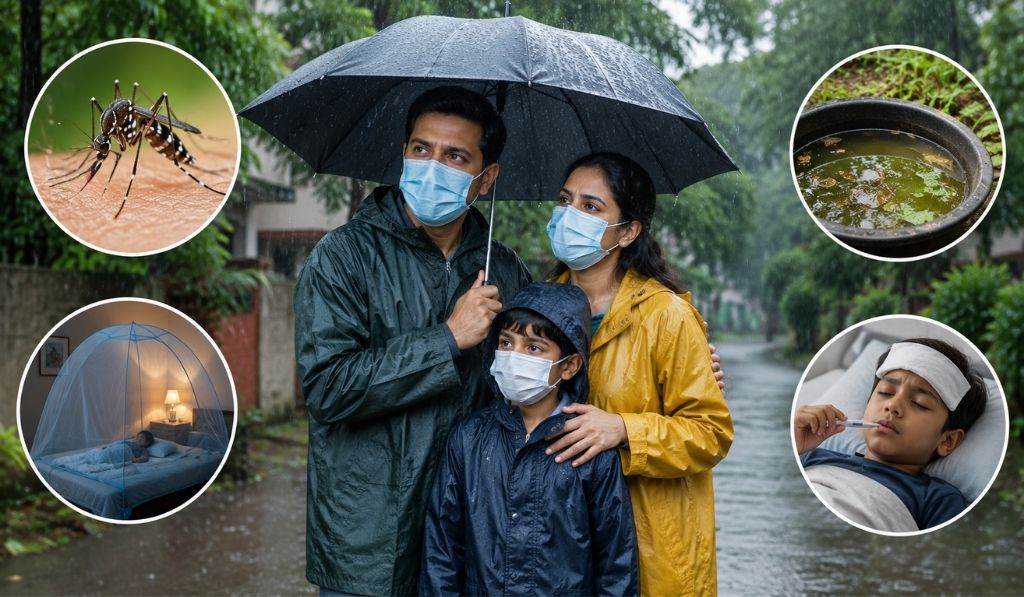
The monsoon season brings cooler temperatures and a welcome break from the summer heat. However, it is also a time when infections such as dengue, malaria, and typhoid become more common. Stagnant water, high humidity, and contamination of food and drinking water can increase the spread of these illnesses. While many monsoon-related infections are preventable, recognising the symptoms early and taking timely precautions are essential to avoid complications.
Monsoon-related infections continue to be a major public health concern in India. More than 2.33 lakh dengue cases and 297 dengue-related deaths were reported in 2024. Although malaria cases have declined over the years, around 2.55 lakh confirmed cases were still reported in the country in 2024. Typhoid also remains a concern during the rainy season because contaminated food and water can increase the risk of infection. These trends highlight the importance of good hygiene, preventive measures, and seeking medical attention when symptoms develop.
Understanding these diseases and taking simple precautions can help you and your family stay healthy during the rainy season.
Why Do Infections Increase During the Monsoon?
Several conditions during the rainy season increase the risk of infections:
- Stagnant water in containers and open spaces encourages mosquito breeding.
- Increased humidity promotes the growth of bacteria and fungi.
- Food and drinking water are more likely to become contaminated.
- Sudden weather changes may affect the body’s natural defence mechanisms.
- Poor sanitation and inadequate hygiene contribute to the spread of infections.
Children, older adults, pregnant women, and people with underlying health conditions may be more vulnerable to monsoon-related illnesses.
Understanding Dengue
Dengue is a viral infection spread by the Aedes mosquito, which usually breeds in clean, stagnant water and commonly bites during the daytime.
Symptoms of dengue usually appear 4–10 days after the bite of an infected mosquito. It often starts with a sudden high fever that may reach 104°F (40°C), along with a severe headache, pain behind the eyes, muscle, bone, and joint pain, nausea, vomiting, and a skin rash. Some people may also notice small red or purple spots on the skin or mild bleeding from the gums or nose.
As the fever begins to reduce, some people may develop severe dengue, which is a medical emergency. This happens when the body’s immune system reacts strongly to the virus, causing blood vessels to leak and the platelet count to drop. Since platelets help stop bleeding, a low platelet count can increase the risk of internal bleeding. Warning signs include severe stomach pain, repeated vomiting, vomiting blood or passing blood in the stool, bleeding from the nose or gums, and feeling extremely tired, restless, or irritable. Seek immediate medical care if any of these symptoms develop.
Preventing mosquito bites and seeking medical attention early are important in reducing complications.
Understanding Malaria
Malaria is caused by parasites transmitted through the bite of an infected female Anopheles mosquito. These mosquitoes are usually active during the evening and night. It is commonly found in tropical and subtropical regions with hot and humid climates. While malaria can affect people of all ages, children under 5 years of age are more vulnerable to developing severe illness and complications. Without timely diagnosis and treatment, malaria can become life-threatening and may affect vital organs such as the brain, lungs, and kidneys.
Symptoms of malaria can range from mild to severe and often begin like the flu. Common symptoms include fever, chills, headache, muscle aches, tiredness, nausea, vomiting, diarrhoea, and difficulty breathing. In severe cases, people may develop seizures, yellowing of the skin or eyes (jaundice), or dark or bloody urine. Symptoms usually appear a few days to one month after being bitten by an infected mosquito, although in some people they may not appear for several months or even up to a year.
Reducing exposure to mosquito bites remains one of the most effective ways to prevent malaria.
Understanding Typhoid
Typhoid fever is a bacterial infection caused by Salmonella typhi. It spreads through contaminated food and drinking water and is commonly associated with poor sanitation. The bacteria live in the intestines of infected people and can also remain in the gallbladder without causing symptoms. This means some people can continue to carry and spread the infection even after they feel better, making typhoid a contagious disease. Early diagnosis and proper treatment are important to prevent complications and reduce the spread of infection.
Symptoms of typhoid fever usually develop gradually over the course of a few weeks. The first sign is often a fever that steadily becomes higher and may continue for several weeks if left untreated. Other common symptoms include headache, chills, loss of appetite, stomach pain, muscle aches, nausea, vomiting, diarrhoea or constipation, and a dry cough. Some people may also develop small, faint pink spots, known as rose spots, on the chest or abdomen, although these may be difficult to see on darker skin tones. Recognising these symptoms early and seeking prompt medical care can help prevent serious complications.
Safe food practices, drinking purified water, and maintaining good personal hygiene are essential in preventing typhoid.
Warning Signs to Watch For
Dengue
- High fever
- Severe headache
- Muscle and joint pain
- Skin rash
- Pain behind the eyes
- Mild bleeding
Malaria
- High fever with chills
- Sweating
- Headache and body aches
- Fatigue and weakness
Typhoid
- Prolonged fever
- Weakness and tiredness
- Stomach pain
- Headache
- Loss of appetite
- Diarrhoea or constipation
If you develop any of these symptoms, especially during the monsoon season, seek medical advice without delay.
Simple Ways to Reduce the Risk of Monsoon Diseases
A few preventive measures can greatly reduce the chances of infection:
- Do not allow water to collect in coolers, buckets, tyres, plant pots, or containers around your home.
- Use mosquito repellents and mosquito nets and install window screens where possible.
- Wear clothing that covers the arms and legs, especially when outdoors.
- Drink only boiled or purified water.
- Avoid unhygienic food and uncooked street food.
- Wash fruits and vegetables thoroughly before eating.
- Wash your hands regularly, particularly before meals.
- Maintain clean surroundings and proper sanitation.
- Eat balanced meals with fresh fruits and vegetables.
- Drink adequate fluids and get sufficient rest.
- Prefer freshly prepared food during the rainy season.
When Should You Seek Medical Attention?
Consult a doctor if you experience:
- Persistent high fever
- Repeated vomiting
- Severe weakness
- Difficulty breathing
- Bleeding or unusual bruising
- Severe abdominal pain
- Symptoms that continue to worsen
Conclusion
The monsoon season brings many joys, but it also increases the risk of infections such as dengue, malaria, and typhoid. Simple measures such as preventing mosquito breeding, drinking safe water, maintaining good hygiene, and seeking timely medical care can go a long way in protecting your health.
For more information or treatment for monsoon-related illnesses, consult the general medicine specialists at P.D. Hinduja Sindhi Hospital, Sampangiramnagar, Bangalore.