
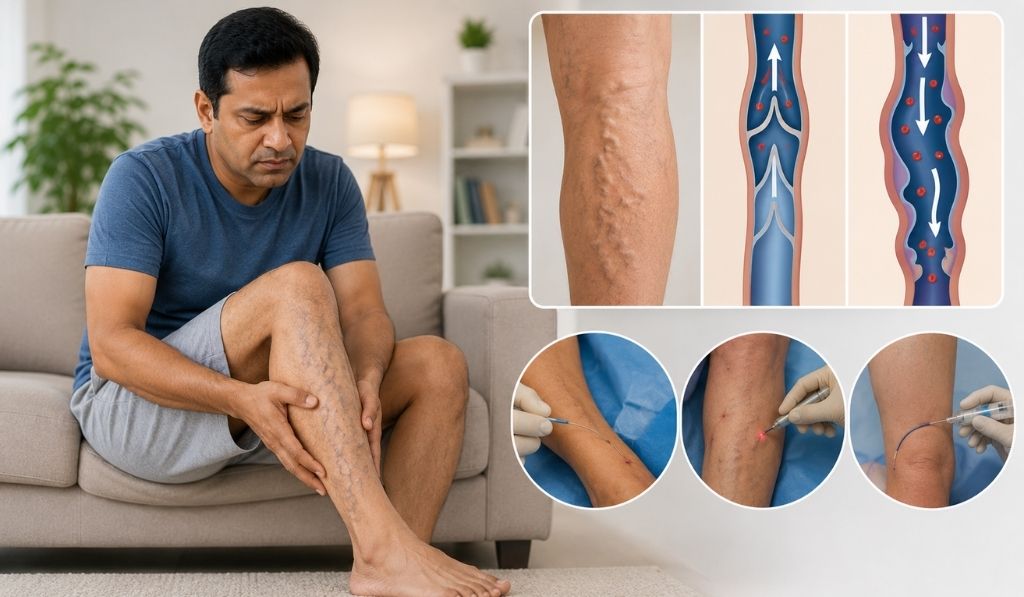
Varicose veins are a common condition affecting blood vessels, most often seen in the legs. They appear as enlarged, twisted, and visible veins under the skin. In many people, the condition develops slowly and may gradually lead to heaviness, discomfort, and swelling in the legs if not managed properly.
Understanding the causes, early symptoms, and treatment options helps in early care and better control of the condition.
What Are Varicose Veins?
Varicose veins are swollen, enlarged veins that become visible under the skin when the valves inside them stop working properly. Normally, these valves help blood flow in one direction towards the heart. When they become weak, blood flows backwards and starts collecting in the veins, causing them to stretch and enlarge.
Varicose veins can develop in different parts of the body, but they are most commonly seen in the legs. This is because the leg veins have to work against gravity to carry blood upwards. When a person stands or sits for long periods, more pressure builds up in the lower limbs, making it harder for blood to return to the heart. Over time, this increased pressure leads to vein swelling and visible varicose veins under the skin.
Understanding the risk factors helps in early prevention and timely treatment. By recognising them early, people can take simple steps to reduce the risk or manage symptoms more effectively.
Causes and Risk Factors
Varicose veins may develop due to several lifestyle and body-related factors.
Common causes include:
- Family history of varicose veins
- Increasing age
- Hormonal changes during pregnancy or menopause
- Long hours of standing or sitting
- Excess body weight
- Low physical activity
- Increased pressure in leg veins over time
These factors can weaken vein walls and affect normal blood flow.
Early Symptoms of Varicose Veins
In the early stages, symptoms may be mild and often ignored. Over time, they can become more noticeable.
Early signs include:
- Blue or dark purple veins visible under the skin
- Twisted or enlarged veins in the legs
- Heaviness or tiredness in the legs
- Mild pain or aching after long standing
- Swelling around the ankles or lower legs
- Burning or throbbing sensation in the legs
- Itching near affected veins
- Symptoms that worsen towards evening
Resting or raising the legs may temporarily ease the symptoms.
When Varicose Veins Become More Serious
If the condition progresses, it may lead to more discomfort and complications.
Warning signs include:
- Persistent leg pain or heaviness
- Swelling that does not improve
- Skin colour changes near the ankles
- Thickened or hardened skin
- Slow-healing wounds or ulcers
- Bleeding from veins close to the skin
- Redness, warmth, or tenderness in the leg
- Sudden swelling in one leg
These symptoms require medical attention.
How Varicose Veins Are Diagnosed
Doctors usually diagnose varicose veins through a physical examination and a review of symptoms.
To understand the condition better, they may suggest:
- Examination of the legs while standing
- Duplex ultrasound scan
- Assessment of blood flow in veins
- Checking valve function in leg veins
This helps in planning the most suitable treatment approach.
We are renowned for providing the best care for varicose vein treatment in Bangalore.
Modern Treatment Options
Modern treatment for varicose veins focuses on improving blood flow, reducing symptoms, and preventing complications. The choice of treatment depends on the severity of the condition and the patient’s overall health. In many cases, early medical guidance and proper care can help manage symptoms effectively and improve quality of life.
Treatment options include lifestyle care, medical support, and procedures that help improve vein function.
Lifestyle and Conservative Care
For mild cases, doctors may suggest simple measures such as the following:
- Regular walking and light exercise
- Avoiding long hours of standing or sitting
- Maintaining a healthy body weight
- Keeping legs elevated while resting
- Wearing compression stockings if advised
These steps help improve circulation and reduce discomfort.
Medical and Procedural Treatment Options
When symptoms are more severe or do not improve with basic care, medical procedures may be recommended to treat the affected veins. These aim to improve blood flow and reduce pressure in the veins.
Common options include:
- Laser-based vein treatment
- Radiofrequency energy treatment for affected veins
- Injection treatment to close smaller veins
- Procedures to remove or seal damaged veins
These treatments are planned based on ultrasound findings and individual patient condition.
Recovery After Treatment
Recovery depends on the type of treatment performed.
- Mild discomfort or bruising may occur
- Walking is usually encouraged soon after treatment.
- Compression stockings may be advised.
- Most patients return to normal activities quickly.
- Follow-up visits help monitor healing and recovery.
Conclusion
Varicose veins are a common condition caused by weak vein valves and poor blood circulation. Early signs such as visible veins, heaviness in the legs, and swelling should not be ignored.
With proper medical care and modern treatment options, most patients can manage symptoms effectively and improve their quality of life. Early consultation helps in better outcomes and prevents complications.
For advanced evaluation and treatment of varicose veins, P.D. Hinduja Sindhi Hospital, Bangalore, provides specialised vascular care and comprehensive management options.
For appointments and enquiries, call: 080 4903 0303